Wake Up, New Zealand: The Tinderbox Is Lit, and Your Apathy Fuels the Fire

Listen up, you keyboard warriors lounging on your couches, firing off hot takes from the safety of your screens. You’re quick to mock the ones out there on the front lines – the desperate souls who’ve had enough of this tyrannical tide and are actually doing something about it. You hide behind anonymous handles, spewing venom at those risking everything to push back against a government gone rogue. But let’s be brutally clear: while you’re virtue-signalling and playing armchair revolutionary, the real carnage is unfolding right under your noses. And if we don’t snap out of this collective coma, the explosion will consume us all.

This isn’t some conspiracy rant; it’s the glaring, gut-wrenching reality staring us in the face. Our so-called government? It’s nothing more than a corporate puppet show, with agencies as its enforcer minions, all hell-bent on total domination. They crush the first ones to cross the line – the whistleblowers, the protesters, the everyday Kiwis driven to desperation because they can’t stomach the lies anymore. These are the examples they make: fines, arrests, ruined lives, all to send a message that resistance is futile. And the police? They’re the blunt instrument, imposing their will with impunity because they know there’ll be no real backlash. Hell, it’s encouraged. Body cams off, batons swinging, rights trampled – it’s open season on dissent, and they’re the hunters.

Look around, for Christ’s sake. The flood of unchecked immigration is reshaping New Zealand into something unrecognizable, diluting our culture and straining resources to the breaking point. Meanwhile, the cost-of-living skyrockets as the bankers’ endgame unfolds without a whisper of hindrance. Inflation isn’t an accident; it’s an engineered squeeze, designed to bleed us dry. People are dying suddenly – young, healthy folks dropping like flies – and we’re supposed to pretend it’s normal? Bullshit. Then there are the countless lives shattered by the side effects of those “safe and effective” jabs pushed down our throats. Heart issues, neurological nightmares, fertility bombshells – families torn apart, and the architects walk free.

Businesses are folding left and right, dreams crushed under the weight of regulations and economic sabotage. Homes? Forget it. Families are being rated out of their own properties, forced into the streets because of excessive borrowing by faceless entities that leech off the backs of those who built this nation. Our parliament is infested with political whores, bending over for their globalist master’s with reckless abandon. They sell out our sovereignty for a pat on the head from Davos elites, while a surveillance state creeps in around us – cameras everywhere, digital tracking, enforcement tech straight out of a dystopian nightmare. All to ensure full control, full dominance.

And you? You’re grinding away at soul-sucking jobs, working your guts out just to stay broke. Paycheque to paycheque, barely scraping by, while the elite laugh from their ivory towers. This country, like so many others, is a tinderbox primed to ignite. One spark – a minor injustice, a wrongful arrest, a family pushed too far – and it all goes up in flames. The damage will be immeasurable, wrought by ordinary people who just wanted to live free: free of government overreach, free of corruption, free of the indoctrination and grooming poisoning our kids in schools.

There’s an old saying: One day, good men are going to have to do very bad things to bad men. New Zealand is teetering on that edge. I’ve seen the corruption firsthand – the injustice doled out to anyone who dares stand their ground instead of hiding behind a screen like a manufactured-outrage troll parroting the official line for brownie points. Real men have been beaten down, neutered, labelled “toxic” for fighting for their families, themselves, and the vulnerable. If we keep doing nothing, we’re cowards. We’ve failed our children, handing them a future of chains.

So, what form will that spark take? What will finally shove us over the brink? While we sit in this eerie calm, drowned out by endless digital noise, we wait. We watch. We prepare. But hear this warning loud and clear: violence is the last resort, the ugly inevitability if things don’t change. I’m concerned – deeply – that blood will flow if we don’t act now to prevent it. Pull our so-called representatives into line. Remind them who they work for: us, the people, not shadowy global cabals. And to the police and enforcement arms: get back to your core job. Protect the people, don’t herd us like cattle to the slaughter. Uphold justice, not crush it under boot heels.

If we ignore this, the apathy wins, and the firestorm engulfs everything. Wake up, New Zealand. The line is drawn – cross it before it’s too late or watch it all burn.

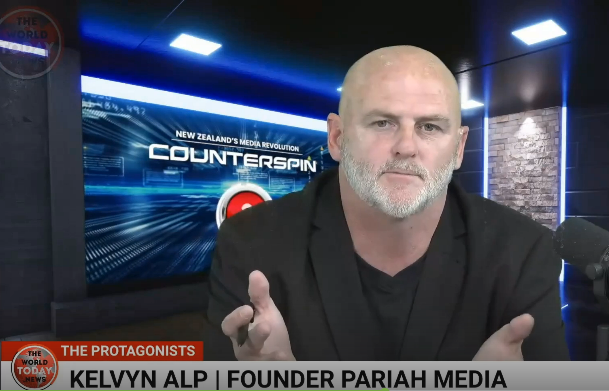
NZ Loyal leader appears on The World Today news


NZ Loyal Party Leader Kelvyn Alp spoke with Mike Ryan from The World Today news show.

They discussed a number of topics, including the recent Tamaki Makaurau by-election, where only 27% of voters turned out.

The upcoming 2026 general election was also discussed and why it’s still important to get involved. If those who are awake don’t vote, then those who do, shall decide for all.

The March 15, 2019 Christchurch mosque attacks were also discussed, and the recent report that we released proving the so-called livestream video to be fake. This event was used to usher in draconian legislation, remove guns from good people, and embark on a worldwide ‘Christchurch Call’ initiative to censor free speech.

Given that corporate media still dominates the public discourse, its discussions like these are vital and need to be shared far and wide.

Download your copy of the forensic report here: https://counterspinmedia.com/wp-content/uploads/2025/08/Forensic-Analysis-FINAL-CHCH-Mosque.pdf

Watch the replay of the press conference here:
https://www.facebook.com/share/v/1CMETPH6mM/

Here, you can link to the full episode:
https://youtu.be/m8ZAFOoYRRE?feature=shared

PREDATORS OR PROFESSIONAL? THE REGULATORS WHO LOOKED AWAY

Two decades of failed companies, damning court rulings, unpaid farmers, and trust boards openly targeted — yet regulators still allow them to operate.

The Record of Urquhart and Flett

Craig Urquhart and Alastair Flett continue to present themselves as fund managers. Yet the record shows a consistent pattern: failed companies, unpaid creditors, litigation defeats, and investor losses.

Their investment offerings have been wrapped in assurances of safety, security, and mortgage-backing. Time and again, those assurances have proven unfounded.

Early Warnings

The courts had already identified the risks more than a decade ago:

Spanbild v Urquhart & Miller — the Court ruled there was “no arguable defence” when Urquhart refused to pay his share of a $1.2 million shortfall.

Tubbs v Urquhart — Justice Heath recorded that receivers had to seek an arrest order after Urquhart refused to hand over company records.

The record was already clear: obstruction, non-compliance, and leaving others to carry the financial burden.

Insolvency in 2021 — While Raising Funds

In Re Urquhart [2021] NZHC 1326, Urquhart admitted debts approaching $5 million and proposed to settle at 8.5 cents in the dollar. The Court rejected it, noting “serious public concerns” about his conduct.

At the same time, he and Flett had registered Kiwi Funds Limited and were raising millions from wholesale investors. The contradiction is stark: in court, insolvent; outside court, soliciting investor capital.

The Oxford Finance Case — Pointe Ormiston

The Oxford Finance case underlines the risks. Urquhart borrowed through Pointe Ormiston Estate Limited, but records show he never made a single repayment. His co-director was left financially ruined, losing property as a result.

Companies Office filings were also altered, with documents lodged under the false name “Craig Alexander,” obscuring his history from basic due diligence.

Only Oxford’s threat of public exposure ultimately forced repayment. Regulation did not.

Kiwi Funds: Security That Did Not Exist

By 2024, Kiwi Funds is in the spotlight. Its Information Memorandum stated:

“All investments are secured by first-ranking general security agreements…”

It bore the signature of chairman Alastair Flett, a chartered accountant.

The Court found otherwise: no perfected security existed. In one instance, a GSA was registered only after receivership had begun. Investors who believed they held first-ranking protection were left unsecured. Within five days of the judgment, Flett resigned from all related entities.

Carriers and Farmers Left Exposed

The consequences were not confined to investors on paper.

Between 2023–2024, multiple transport carriers financed by Urquhart and Flett went into receivership or liquidation. When they sought account statements, they were refused.

Farmers who sold livestock through traders financed by them went unpaid — in some cases hundreds of thousands of dollars.

In May 2024, South Island carriers approached this investigation to expose the scale of the problem.

Invoice Factoring and Investor Funds

Further inquiry shows that the carriers and farmers were trading with Urquhart and Flett through their entity NZ Trade Finance Limited, which provided invoice factoring to transport operators and livestock buyers. The funds for this factoring came directly from investor money advanced into Kiwi Funds, the wholesale investment vehicle controlled by both men.

The Kiwi Funds Information Memorandum — recently sourced and supplied to us directly by NZ Invest Group (a new phoenix-branded investment vehicle under which Flett and Urquhart are now trading, seemingly to distance themselves from the Kiwi Funds brand following the October 2024 judgment — though notably, the IM itself still carries Kiwi Funds branding) — states that all such investments are to be secured by first-ranking securities, including general security agreements and mortgages. Kiwi Funds then lent into NZ Trade Finance Limited and NZ Finance Group Limited on those terms. These were the same terms presented to the Māori trust board investor.

However, the October 2024 judgment (sourced from NZLII) found these very terms were not complied with. For over 12 months, Kiwi Funds had knowingly failed to perfect securities, misleading investors about the protection of their money. Pariah media contacted, the investors named in the October 2024 decision, who declined to comment, as citing there is further ongoing High Court proceedings with Kiwi Funds.

This entire investigation began with an aggrieved transport carrier and livestock buyer — FFL Group — (to which NZ Finance Group Limited placed into receivership in March 2024) contacting the platform on the record, alongside multiple South Island carriers who described being on the receiving end of “big bully boy” tactics by Urquhart in particular. Urquhart himself communicated with this platform on multiple occasions, accusing his victims of misinformation. Notably, in the October 2024 judgment, he was found to have misled investors in his dealings.

A clear pattern has emerged throughout this 14-month investigation: victims consistently report being subjected to smear campaigns by both Urquhart and Flett. Their strategy appears consistent — the best form of defence is attack.

During this period, a senior member of an iwi trust was also subjected to a targeted defamation campaign, leaving them to fight for personal and professional survival while litigation continued. The record shows that for Urquhart and Flett, court action is not an exception but a recurring feature of their business model.

Trust Boards Targeted

In October 2024, a trust board was informed that its investments with Urquhart and Flett were “lost.” Instead of restitution, trustees faced aggressive litigation and public criticism.

The timing was notable: these events coincided with the October 2024 judgment against Kiwi Funds. Within days, Flett resigned from all entities.

Fear and Intimidation

Accounts from victims and former employees describe a strategy of fear:

Urquhart is said to boast he can “drag you to hell and back” through litigation.

Flett is reported to deflect scrutiny by attacking the character and record of those who complain.

Meanwhile, lifestyle signals diverge sharply from insolvency claims. In 2021, Urquhart declared himself broke before the High Court; outside it, he continued to live in luxury.

A Familiar Model

The record across cases shows a recurring model:

Investor funds diverted into unrelated acquisitions (Permadeck, Quilt, commercial and residential property).

Investors later told their money was unavailable, tied up and then ultimately “lost.”

At Norfolk Funds Management, both men were forced out for non-disclosures, insolvency issues and ongoing court matters.

Those who challenged them reported being attacked, discredited, or drawn into protracted litigation.

In July and August 2024, Urquhart spoke openly on the record, but later sought to recast or deny those statements.

The Pattern

The record across cases shows the same cycle:

Offer security that does not exist.

Raise capital under the wholesale investor exemption.

Collapse, leaving creditors and investors unpaid.

Deploy litigation against victims, often funded from their own money.

Harass or intimidate complainants.

Withdraw, rebrand, and re-emerge under new structures.

Courts have recognised this. Victims have lived through it. Regulators, however, have not intervened.

Why Reform Is Needed

The wholesale investor exemption remains the central shield. It allows capital to be raised without requiring operators to prove they are fit and proper. Victims face prohibitive legal costs, while the operators continue unchallenged.

Judges have already sounded the alarm:

“No arguable defence.”

“Failure to comply.”

“8.5 cents in the dollar.”

“Serious public concerns.”

The question is no longer about evidence. It is about regulatory will.

Conclusion

The record shows a long trail of collapsed companies, unpaid debts, and investor losses tied to Urquhart and Flett. What also emerges is a pattern of regulatory inaction. Until the wholesale investor exemption is reformed, the cycle of collapse and re-emergence is likely to continue.

Timeline of Key Events

2009 – Finco Collapse: Court describes “no arguable defence.”

2011–2015 – Litigation: Spanbild and Tubbs confirm obstruction and refusal to comply.

2021 – Insolvency: Attempt to walk away from $5m at 8.5c/$1. Court cites “serious public concerns.” Kiwi Funds already registered.

2021–2023 – Oxford Finance: Pointe Ormiston loans collapse. False filings under “Craig Alexander.” Repayment only after exposure threat.

2023–2024 – Farmers & Carriers: Carriers liquidated; farmers unpaid. Operations channeled through NZ Trade Finance Limited, funded by Kiwi Funds.

October 2024 – Kiwi Funds Judgment: Court finds no perfected security. IM signed by Flett. Resignations within five days.

October 2024 – Trust Board: Investments declared “lost.” Trustees targeted with litigation. Urquhart himself communicating with this platform. The investigation itself began with FFL Group and other South Island carriers raising concerns of “bully boy” tactics.

2024–2025 – NZ Invest Group: Emerges as a new phoenix-branded investment vehicle for Flett and Urquhart, even as the IM remains under Kiwi Funds branding.

2025 – Still Operating: Complaints continue. Victims remain exposed.

Kelvyn Alp’s full interview with The Spinoff about his Tamaki Makaurau campaign.

I’m Kelvyn Alp, and I’m not here to peddle empty promises or establishment rhetoric. I reject division and separatism – we’re all part of the solution, as global pressures like unchecked immigration threaten to drown out our voices, rendering Māori vs. non-Māori debates irrelevant. I’m not “far-right”; no one can pin that label on me with evidence that holds up. My record – using a Māori passport abroad twice, aiding the Māori government since 2000, and personally funding the building bearing my name at Leabank Primary School in 2009 – proves I deliver results, not talk. That building, expedited through my working closely with Manukau City Council, boosted school attendance by providing breakfast clubs, free counselling, and budgeting advice, showing I do, not just say.

While I don’t toe any party line, I stand firmly by the NZ Loyal policies I wrote myself, as they’re real solutions to this country’s problems, not glossy wish-lists dangled without intent to deliver. My greatest asset is understanding both Māori and non-Māori perspectives, always seeking beneficial outcomes for all without disadvantaging any. One person can’t repeal legislation alone – anyone claiming otherwise is dishonest – but I’ll build relationships to drive change based on need, not desire. My priorities are clear: bridge the gap between Māori and non-Māori, tackle predatory businesses, and address poverty’s root causes with facts, not wishful thinking. This by-election is for less than half a term – give me one chance, one term, one time to prove my worth. If I fail, boot me out in 2026.

Unlike front-runners Peni Henare, who’s achieved little since 2014, or Oriini Kaipara, a former media talking head with no exposés, I’ve proven myself through action.

Almost 40% of those in the electorate are under 35 years old, yet voter turnout for that demographic was only 65% at the last election. Why do you think turnout is so low for this demographic and what have you done during the campaign to engage this group and encourage them to vote?

Young people under 35 are fed up with politicians who promise big but deliver nothing, leaving them disillusioned. They see the system propping up establishment hacks while poverty, housing, and job insecurity worsen, making voting feel pointless. In this campaign, I’ve utilized my connections in Tāmaki Makaurau to reach a wide audience, and have used social media platforms for fact-based information dissemination and responded to any questions asked and responded in a way that cuts through the noise. I’ve told them straight: this byelection is their chance to break the cycle. NZ Loyal policies, which I penned, offer real solutions, not empty promises. Give me one term to deliver, and if I don’t, kick me out next year.

If you are successful in this election, what would your top three priorities be specifically for the electorate?

First, I’ll bridge the divide between Māori and non-Māori in Tāmaki Makaurau by fostering real dialogue – talking with each other, not past or at each other – because we’re all part of the solution as bigger threats like immigration dilute our voices. Second, I’ll crack down on predatory businesses and finance companies exploiting our vulnerable families, using evidence-based policies to stop their scams. Third, I’ll tackle poverty’s root causes – lack of education, jobs, and health access – with solutions grounded in need, not wants, to benefit all without disadvantaging any, reflecting my ability to understand both sides.

How would you work with mana whenua groups to ensure their concerns and priorities are addressed and supported?

I’ll engage mana whenua through direct, fact-based discussions, focusing on shared needs like environmental protection [addressing pollution and waste – not climate change alarmism] and community well-being. I reject separatism – our strength lies in unity, especially as external pressures threaten to overshadow local concerns. My NZ Loyal policies, which I crafted, prioritize solutions that work for all. My approach, proven by my work with the Māori government since 2000, is to listen, collaborate, and deliver outcomes that benefit everyone in Tāmaki Makaurau without favouring one group over another.

How would you work with the council and local boards to implement policy changes and address concerns you have? How well do you understand the machinery of council and do you have established relationships within council?

I’ll work with Auckland Council and local boards by building strong, evidence-driven partnerships, pushing for policy changes through relentless advocacy and joint efforts on issues like housing and transport. I won’t just go along to get along. My experience, including working with Manukau City Council in 2009 to fund and expedite the building bearing my name at Leabank Primary School, shows I understand council mechanics – its committees, obligations, and red tape. That project, which I personally funded, boosted school attendance through breakfast clubs, counselling, and budgeting advice, proving I deliver results that benefit all. While I don’t rely on establishment ties, my grassroots connections and NZ Loyal policies drive real change.

Do you think the Independent Māori Statutory Board deserves more power within the council? Why or why not?

No. Giving the Independent Māori Statutory Board more power risks deepening division, which I reject. We’ve seen too much talking past each other – separatism weakens us all. The Board’s role is to ensure Māori voices are heard, but more authority could create parallel systems, pitting Māori against non-Māori. As global issues threaten to drown out our voices, we need unity. My focus is on collaborative solutions that benefit everyone without disadvantaging any, reflecting my understanding of both sides’ needs.

In April, Shane Jones threatened to step-in to stop the Waitākere Ranges Heritage Area management agreement. What are your views on how it has turned out? Do you think mana whenua deserve to have an equal number of seats on the decision-making committee as other authorities?

Shane Jones’ threat to meddle in the Waitākere Ranges agreement was heavy-handed, but the outcome – preserving local input – shows top-down control doesn’t always win. I don’t support equal seats for mana whenua on the committee if it’s tokenism or creates imbalance. Representation must be based on need, not quotas that fuel division. I’ll prioritize fair, evidence-based outcomes for all. My record, like using a Māori passport abroad, shows I respect mana whenua while seeking solutions that unite Tāmaki Makaurau without disadvantaging anyone.

Tīkapa Moana has been suffering severely in recent times. Depleted fish stocks, invasive exotic caulerpa, and the ticking time-bomb of the RMS Niagara. How will you address these issues if elected as the Tāmaki Makaurau MP? Would you repeal the legislation allowing commercial fishing within protected areas of Tīkapa Moana?

Tīkapa Moana’s crisis demands action, not talk. I’ll push for tougher enforcement against overfishing, seek to fund research to eradicate caulerpa, and demand a clear plan to neutralize the RMS Niagara’s risks – all rooted in evidence. On commercial fishing in protected areas, I won’t lie – one person can’t repeal legislation alone; anyone claiming otherwise is a fraud. But I’ll build coalitions to work toward repealing harmful laws, guided by policies that prioritize the ecosystem’s health for all in Tāmaki Makaurau. My record, like funding the Leabank building that boosted school attendance through breakfast clubs, shows I deliver results that benefit everyone.

Food and transport costs hit Māori and Pacific families the hardest in this electorate. What practical steps would you take to ease this pressure?

Māori and Pacific families are being crushed by predatory businesses and rising costs. I’ll target exploitative finance companies with fact-based regulations, capping interest rates and enforcing transparency, as outlined in policies I stand by. I’ll push for subsidized transport passes for low-income whānau and expand community-led food programs, like the breakfast club I funded at Leabank Primary in 2009, which increased school attendance and improved learning by ensuring kids were fed, with added counselling and budgeting advice. These solutions, rooted in need, benefit all without disadvantaging any, reflecting my understanding of both sides. However, unless this country solves its debt-crisis and financial mismanagement, there will be no genuine solutions available that aren’t akin to putting a plaster on an amputation.

With Te Aka Whai Ora disestablished and our health system under pressure, how will you make sure Māori in this rohe still have equitable access to care? What about rangatahi mental health in particular?

Te Aka Whai Ora’s end was a setback, but I’m here to fix problems, not complain. I’ll fight for targeted funding to community clinics in Tāmaki Makaurau, ensuring Māori get culturally responsive care without bureaucratic roadblocks. For rangatahi mental health, I’ll advocate for evidence-based peer-support networks and accessible counselling, tackling root causes like poverty and disconnection. My policy position advocates equitable solutions for all. My work, like funding the Leabank building that provided free counselling, proves I deliver outcomes that unite Māori and non-Māori without favouring one over another.

When your party’s stance clashes with the needs of Tāmaki Makaurau whānau, who will you side with – and can you give a concrete example of where you have gone against the grain before?

I answer to Tāmaki Makaurau’s whānau, not any party line, though I stand by the NZ Loyal policies I wrote as genuine solutions, not empty promises. My loyalty is to evidence and the electorate’s needs, ensuring outcomes benefit all without disadvantaging any. I’ve gone against the grain before – using a Māori passport abroad twice, defying systems to prove a point, and funding the Leabank Primary building in 2009, which I worked with Manukau City Council to deliver, boosting school attendance through breakfast clubs, counseling, and budgeting advice. Unlike Peni Henare, who’s coasted since 2014, or Oriini Kaipara, with no exposés, I’ve delivered results. Give me one term to prove my worth – if I fail, vote me out in 2026.

This interview was conducted by Liam Ratana from The Spinoff.

Candidate calls for reform after $1.8 million ‘lost’ from Iwi Trust Board.

A Broken System That Betrays Investors

As a candidate in this election, I cannot stand by while New Zealand’s wholesale investment framework continues to let investors down.

Today, fund managers who manage millions of dollars are not even required to prove they are fit and proper persons. Worse still, when investors suffer devastating losses, regulators tell them to go to the Police or the SFO – and those agencies then say the matters don’t “meet the threshold.” The result is a revolving door of inaction, leaving victims abandoned.

This is not regulation – This is neglect.

The Human Cost of Regulatory Failure

Let’s be clear: this isn’t theory – it is happening right now.

• Black Robin Equity collapsed, leaving investors with devastating losses; some lost over $1 million.

• Senior Trust Capital is under FMA investigation and winding down. Investors have been told it could take up to 10 years to get their money back, if at all.

• Du Val Group was placed into statutory management, with regulators pouring energy and taxpayer dollars into that single case. Yet by focusing almost entirely on Du Val, they have left some of the worst wholesale operators in the market untouched – free to continue ripping off Kiwi investors.

• Right here in Pukekohe, a fund operated by a questionable financier with a long history of failed finance companies and his partner, a chartered accountant from the Waikato, declared in October last year that a Māori trust board’s $1.8 million investment was “lost.” Instead of accountability, they attacked the trust’s CEO, victim-shamed the board, and forced the victims into the High Court to fight for justice. They know the court system is broken – they know it will take years before the victims even get a hearing. And when they are finally held to account, they rise like a phoenix, launching new fund brands under different names to hide their trail.

This is exactly the type of behaviour that Minister Andrew Bayly once said he would stamp out – phoenix directors creating new fronts to dodge accountability. But it isn’t happening. These operators continue to appear, ripping off our families and destroying victims with intimidation and victim shaming.

This is a textbook example of Ponzi-style schemes operating unchecked in our financial markets.

How Victims Are Silenced?

Unsophisticated investors, community trusts, and Māori boards are deliberately targeted because they are less likely to go public if they lose money – fearing ridicule in the market and in the media. When they do speak up, they are attacked and defamed by the very fund managers who misled them.

This isn’t just financial abuse – Its intimidation designed to silence victims.

My Commitment to Change

I will fight to regulate the regulators and put an end to this culture of impunity. My plan includes:

1. Licensing Wholesale Fund Managers – every manager must be licensed by the FMA and pass a fit and proper test.

2. Automatic Investigations – any complaint involving a loss over $50,000 must trigger an investigation, no excuses.

3. Protecting Vulnerable Investors – special support for Māori trusts, community investors, and unsophisticated investors; legal protections against victim shaming and intimidation.

4. Accountability of Agencies – the FMA, SFO, Companies Office, and Police must report annually to Parliament on the complaints they receive, what actions they took, and why.

Final Word

“I will hold fund managers to account. I will hold regulators to account. And I will fight for the thousands of ordinary New Zealanders – right here in this constituency – who deserve protection from predators in suits. Next week, I will be naming the Pukekohe party responsible. The only way to get rid of this infectious material is to shine light on it and disinfect it – so it stops happening to any more victims. We cannot wait for the next collapse. We must act now.”

Vote for Accountability • Vote for Change • Vote 6 September 2025

Truth on Trial: Forensic Video Analysis Report

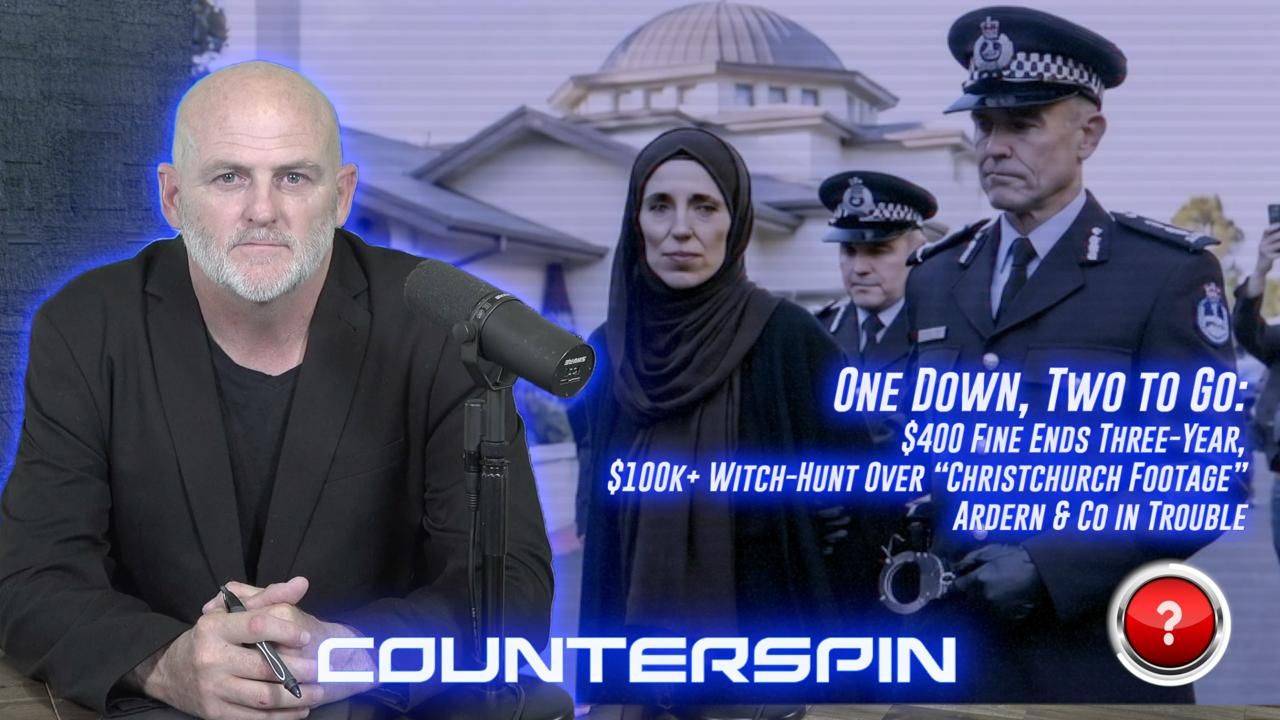
Kelvyn Alp and Hannah Spierer drop explosive evidence that the ‘Christchurch Mosque attack’ video [March 15, 2019] – banned in New Zealand from being viewed, possessed or distributed – was a staged event. It’s FAKE!


We make no claims pertaining to what else may have happened on that day, however, what we can say with absolute certainty, is that the video exhibits zero victims and is a staged event. This information is chilling considering the follow-on draconian measures implemented after the event – it further calls into question, the integrity of all involved. The official government narrative has now collapsed.

Due to the censorship of the video within New Zealand, the team were forced to travel to Thailand to undertake the detailed examination and analysis.

The ‘Forensic Video Analysis Report’ authored by Gareth Jacobs and recently peer reviewed by other experts leaves no doubt of a cover-up at the highest levels.

Quotes from the first page of the report:

I contacted Detective Inspector Chris Cahill, the President of the Police Association and discussed the concerns I had with the video. I urged him to make contact with the officers involved with the shooting inquiry to urge them not to use that video as evidence in any upcoming court case as it was likely fake and may jeopardise the case.’

I have used my 5 years military experience and 14 years as a Digital Forensic Analyst as a basis for reviewing the authenticity of the video and reporting on my findings. The findings will show compelling evidence that the video is not genuine.’

Download your own PDF copy of the ‘Forensic Video Analysis Report’ here:

Livestream Link


Please follow Counterspin Media on Facebook for the livestream of today’s press conference at 4.30pm:

https://www.facebook.com/counterspinmedia1

Also we will be LIVE on telegram: https://t.me/counterspin

https://truthontrial.nz/Truth_On_Trial.html

Voting Begins in Tamaki Makaurau

Overseas voting has begun in the Tamaki Makaurau By-Election and early voting will begin on August 25th 2025.

Below is the information on how to vote in person or from overseas.

Voting in a By-Election

A by-election is held to fill a vacancy when a member of Parliament who represents an electorate leaves their role. There is no party vote.

In a by-election, you vote for the candidate you want to represent your electorate in Parliament.

To be eligible to vote, you must be enrolled in the Tamaki Makaurau electorate.

What you need to know:

If you’re enrolled, you’ll get a voting information pack in the mail. The pack tells you:

  • how to vote
  • who the candidates are
  • when you can vote
  • where to find voting places near you. 

You’ll also get an EasyVote card that makes voting quicker.

Voting from Overseas

The Electoral Commission don’t automatically send voting papers to overseas voters, so get your voting paper by:

  • downloading one online
  • voting in person at an overseas voting place.

Voting papers are available from about 2 weeks before election day. When a by-election is on, check the Electoral Commission website for the details you need to get a voting paper and return it to them.

Voting in Person

If you’re enrolled, you can just turn up and vote. Remember to take your EasyVote card. If you haven’t got a card or forget it, you can still vote. You don’t need to take ID.

Voting in a by-election is like voting in a general election. When you get to a voting place, someone will be there to guide you.

Someone will find your name on the printed electoral roll and give you a voting paper. If your name isn’t on the roll, you might need to fill out some forms so you can vote.

You take your voting paper to a voting booth. Your voting paper will have a list of candidates. You tick the circle next to the candidate you want to represent you, fold your paper in half, and put it into a voting box.

Source: https://vote.nz/voting/how-to-vote/what-to-do/

Press Conference Announcement

Join us for an explosive press conference unveiling critical information in the public’s interest pertaining to the ongoing legal battle against journalists Kelvyn Alp and Hannah Spierer, where three years ago [August 25th] they were charged with distribution of objectionable material associated with the ‘Christchurch Mosque attack’.

Kelvyn Alp’s bold candidacy for the Tamaki Makaurau by-election will also be discussed.

Media and community urged to attend and questions will be taken from those in attendance.

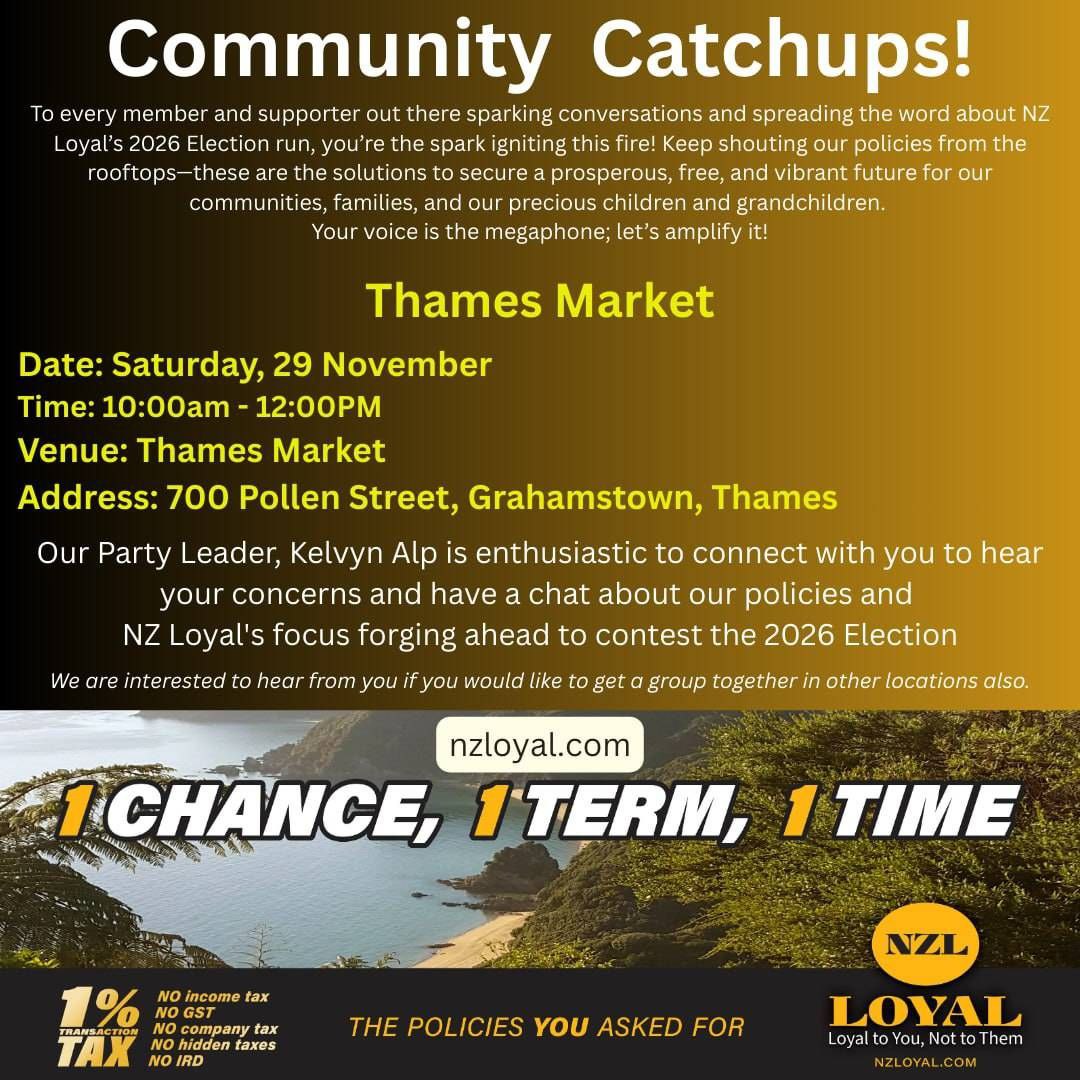
Date: Sunday, 24th August 2025
Time: 4.30pm – 6.30pm
Venue: Onehunga Community Centre, Yates room.
Address: 83 Church St, Onehunga.

For enquiries, contact us: [email protected]