

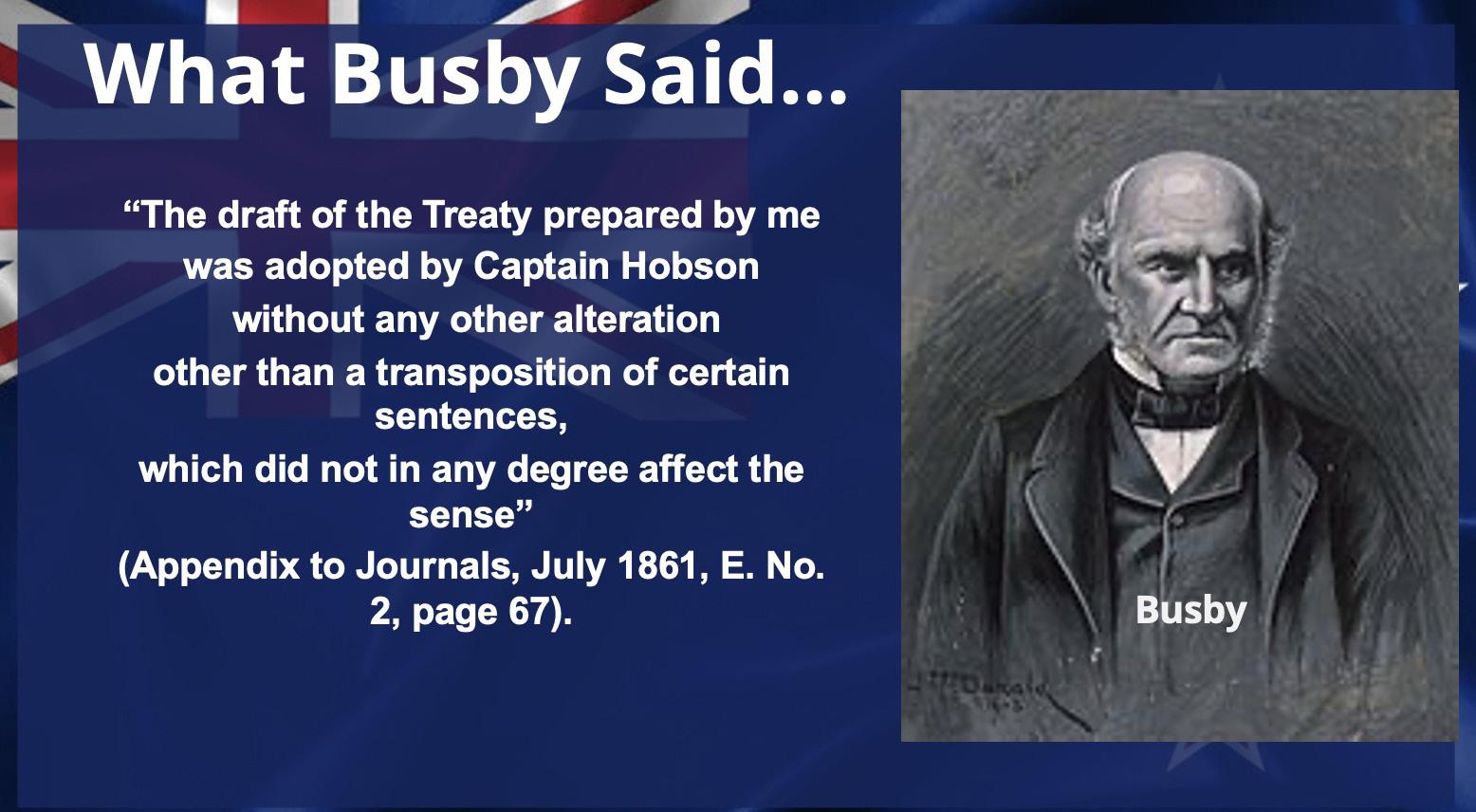
In his groundbreaking 1992 book The Littlewood Treaty: The True English Text of the Treaty of Waitangi, researcher Martin Doutré reveals a long-lost document discovered in 1989 among the papers of a deceased Auckland solicitor’s family. This unassuming four-page manuscript, penned in the unmistakable hand of British Resident James Busby, is dated February 4, 1840 – the very day Captain William Hobson finalized it at James Clendon’s Okiato home before handing it to Reverend Henry Williams for urgent translation into Māori as Te Tiriti o Waitangi. Unlike the patchwork “official” English text cobbled together months later by clerk James Freeman from rough pre-draft notes (omitting key protections for all New Zealanders, including settlers), the Littlewood version is a near-perfect mirror of the Māori treaty signed by over 500 rangatira: it cedes kawanatanga (governance) to the Crown in Article I, guarantees tino rangatiratanga (chieftainship) over lands, villages, and taonga in Article II – explicitly extending to “the chiefs and tribes and to all the people of New Zealand” for equal British subjects rights in Article III – and ends with a simple affirmation of mutual peace, no “partnership” clause in sight.
Evidence seals its authenticity as the mother document: Handwriting expert Dr. Phil Parkinson of the Alexander Turnbull Library verified Busby’s script; the watermark (W. Tucker 1833 paper) matches Clendon’s consular stock, from which he transcribed duplicates sent to the U.S. on February 20 and April 5, 1840; its impeccable provenance traces from Hobson via Clendon to solicitor Henry Littlewood by the 1850s; and crucially, its phrasing aligns verbatim with Williams’ Māori translation’s structure, sentence weight, and inclusive idioms (e.g., “tangata katoa o Nu Tirani” echoing “all the people of New Zealand”), predating any back-translation theories. No earlier draft fits – Busby’s February 3 notes were incomplete, lacking Hobson’s final additions for universal protections.
This revelation is seismic: Te Tiriti was never a vague “partnership” enabling endless claims but a straightforward cession of sovereignty for equal citizenship, rendering the $ billions in Waitangi Tribunal payouts and co-governance pushes – built on Freeman’s flawed composite – fabricated fictions propping a lucrative industry of division and grievance. Yet it meets deafening silence from academia and media, not from scholarly rigor (debates persist, with critics like historian Don Loveridge labeling it a post-signing back-translation, though rebuttals dismantle his suppositions on dating, location, and provenance), but because validating it torpedoes the gravy train: no more manufactured Māori exceptionalism, no tribal elites skimming settlements, no elite puppeteers peddling victimhood for votes and virtue-signaling.
The moral? We’ve all been shafted by the same shadowy architects – colourblind opportunists whose playbook dates to antiquity: sow division (left vs. right, white vs. non-white, haves vs. have-nots) to harvest control, manipulation, and subjugation. The Littlewood Treaty screams unity under one law for all Kiwis; ignore the race-baiters, reclaim the real Tiriti, and starve the divide-and-conquer game. History isn’t theirs to rewrite – it’s ours to restore.
